
Pollution at Sea: Vessel Impacts and Regime Interaction in Ocean, Climate and Biodiversity Law (SeaPact)
SeaPact examines marine pollution from exhaust gas cleaning systems and marine litter as both raise questions about international legal regimes governing marine protection.
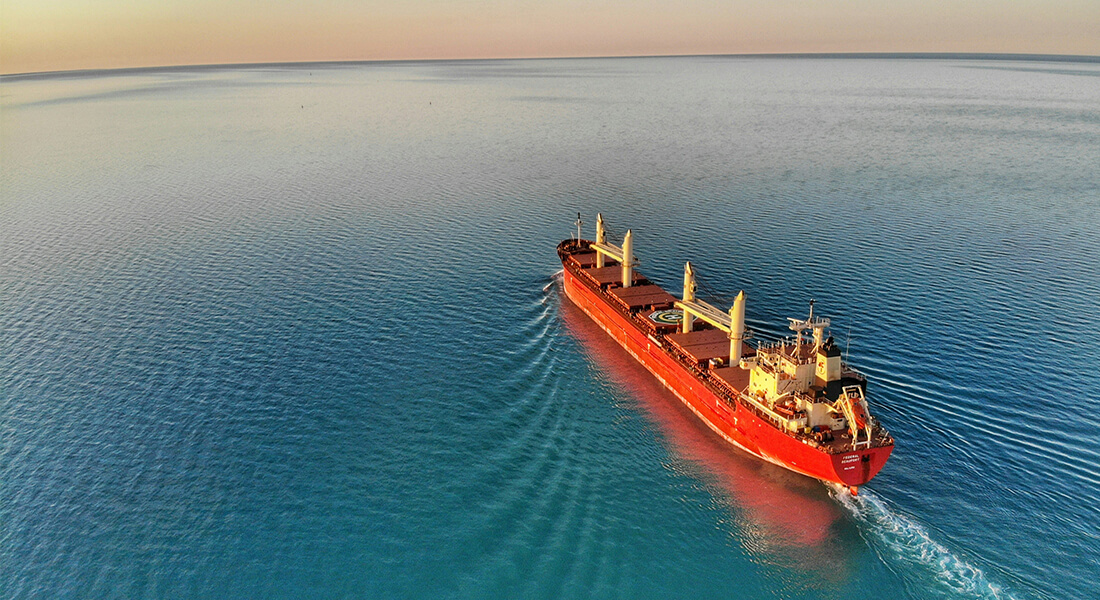
SeaPact examines how international law can better address pollution from vessels, protect the marine environment and its biodiversity. Focusing on pollution from exhaust gas cleaning systems (scrubbers) and vessel-based marine litter, the project investigates how different legal regimes interact and how greater regulatory coherence can improve environmental outcomes.
The ocean is at the heart of the interconnected triple planetary crisis of climate change, biodiversity loss and pollution. While essential to planetary health, the ocean is increasingly affected by human activities, including international shipping and fishing. Vessel activities generate diverse environmental impacts, ranging from operational discharges to marine litter. Yet the international legal response is spread across different regulatory regimes and institutions, which do not always operate coherently.
SeaPact examines two particularly important and underexplored sources of vessel-based marine pollution: discharges from exhaust gas cleaning systems, commonly known as scrubbers, and vessel-based marine litter. Using regime interaction theory, the project explores how international climate, air pollution, ocean and biodiversity law can work together more effectively to address these challenges.
SeaPact combines doctrinal and empirical legal research, in the form of interviews with state and non-state actors taking part in relevant law-making and implementation processes. Combining these approaches will provide new insights into how environmental rules are created and implemented and identify barriers and opportunities for greater coordination between legal regimes.
SeaPact’s overall objective is to provide new insights into international law governing marine environmental protection from vessel-based pollution. The project uses the concept of regime interaction to investigate how different areas of international law overlap, interact and influence one another. This makes it possible to identify regulatory gaps and conflicts while also uncovering opportunities for greater coordination and coherence.
SeaPact focuses on two complementary areas of research.
Sub-Project 1: The Regulation of Scrubbers: Regime Interaction in Air Pollution, Climate and Ocean Law
Exhaust gas cleaning systems, or scrubbers, are widely used by ships to comply with international limits on sulphur emissions. Scrubbers remove pollutants from ships’ exhaust gases, but many systems subsequently discharge the resulting wash water, which can contain substances harmful to marine ecosystems, directly into the ocean.
Through this work package, SeaPact examines how scrubbers are regulated across overlapping legal frameworks. The research will identify regulatory overlaps, inconsistencies and conflicts and investigate how different actors interpret and implement existing rules. It will also explore how future regulation can better coordinate air pollution, climate and ocean objectives while avoiding the transfer of pollution from one environmental domain to another.
Sub-Project 2: Vessel-based Marine Litter: Regime Interaction in Ocean and Biodiversity Law
Marine litter is another significant source of pressure on ocean ecosystems. Although much marine litter originates on land, shipping and fishing activities contribute through plastics, lost, abandoned or discarded fishing gear and other persistent materials.
Regulation in this area is distributed across numerous international instruments and institutions dealing with ocean protection, shipping, fisheries, plastics and biodiversity. Through this sub-project, SeaPact examines how these different regimes interact and how greater coordination could strengthen protection against vessel-based marine litter. The research will map the existing legal landscape, examine implementation initiatives including examples from the North Sea and Baltic Sea, and investigate emerging international law-making processes. Particular attention will be given to the roles played by governments, international organisations, industry, environmental organisations and other actors in shaping regulation.
Researchers
| Name | Title | |
|---|---|---|
| Catonini, Federica | Research Assistant |
|
| Klerk, Bastiaan Ewoud | Postdoc |
|
| Martinez Romera, Beatriz | Head of Centre, Associate Professor |
|
Researchers continued
| René Taudal Poulsen, CBS |  |
Collaborators
| Katherine Richardson | Professor Globe Institute Section for Macroecology, Evolution and Climate University of Copenhagen |
Funding
The project is funded by Independent Research Fund Denmark.
Project period: September 2026 - September 2029
Co-PI: René Taudal Poulsen, CBS
Cooperation
